What to Do in the First 24 Hours After Water Damage
The first 24 hours after water damage set the scope of the loss. In Port Charlotte, FL, explore a practical emergency action checklist — safety, water shutoff, documentation, contamination, and when professional extraction and drying may be needed.
Request Restoration Help
Tell us about the property damage and the location. Submit your inquiry so the appropriate next steps can be discussed.
What to Do in the First 24 Hours After Water Damage
The first 24 hours after water damage are about safety, source control, and documentation — in that order. The priority is to protect people first, then to stop the water from causing more damage, and then to record what happened so the restoration scope and any insurance claim can proceed from an accurate starting point. The actions taken in the first day shape how far the damage spreads and how smoothly the recovery proceeds.
Water migrates into building materials faster than most owners expect. A supply-line leak that looks like a small puddle can be soaking into carpet padding, wicking up drywall, and saturating a subfloor within hours — especially in humid Southwest Florida air, which slows natural drying. The sooner the source is stopped and the moisture is evaluated, the more secondary damage such as microbial growth and material deterioration can be limited.
This guide walks through the first-day steps in order, what not to do, and a room-by-room checklist. It is general guidance for common residential water losses; it is not a substitute for assessing the specific conditions of a loss. When in doubt about safety — electrical hazards, contaminated water, or structural stability — prioritize safety and contact qualified help before entering the affected area.
First-Day Priorities & What Not to Do
These are the actions that matter most in the first 24 hours, and the mistakes that can worsen the loss or create hazards:
The First 24 Hours, Step by Step
The first-day sequence keeps safety at the front. Before entering the affected area, confirm there are no electrical hazards — water in contact with outlets, cords, or appliances is a shock hazard, and the breaker for the affected circuit should be off if the panel is safely accessible. If the source is an interior plumbing line or appliance, shut off the main water supply to stop further flow. Only then does documentation begin: photographs and video of the affected rooms, the water source, and the damaged materials, captured before anything is moved.
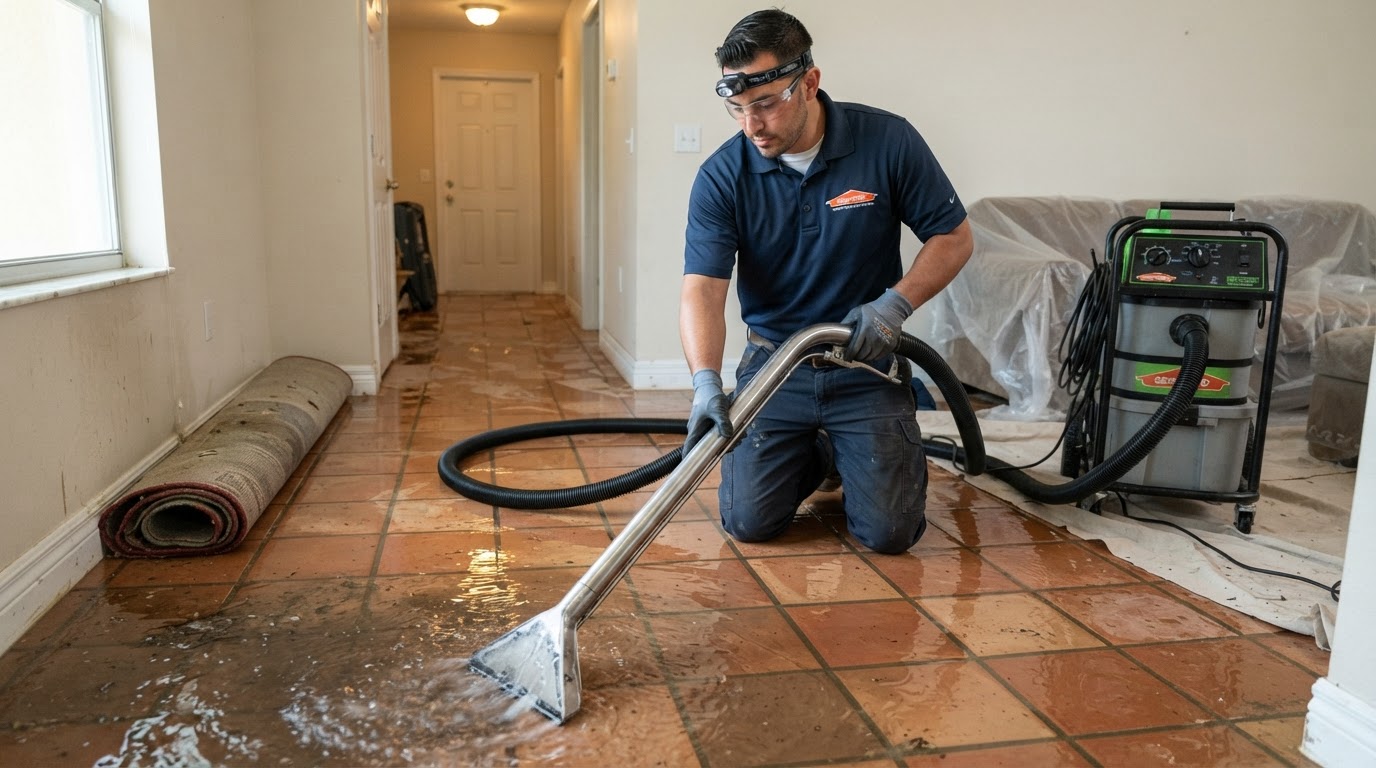
After documentation, unaffected belongings can be moved to a dry area without entering hazardous zones. The contamination category is considered — a clean supply-line leak, a grey-water appliance overflow, and a sewage backup are not handled the same way, and sewage or floodwater requires precautions that clean water does not. A qualified restoration professional is contacted for assessment and extraction when building materials are affected, and the loss is reported to the insurer. The sooner professional moisture evaluation begins, the more secondary damage is limited.
Step 1 — Prioritize Safety
Check for electrical hazards, contaminated water, and structural risks before entering the affected area.
Step 2 — Stop the Source
Shut off the main water supply or the fixture/appliance valve if it is safe to reach.
Step 3 — Shut Off Power
Cut electrical service to the affected area if the breaker panel is safely accessible.
Step 4 — Document
Take date-stamped photos and video of affected rooms, the source, and damaged materials before moving anything.
Step 5 — Protect Belongings
Move unaffected items to a dry area without entering hazardous zones.
Step 6 — Identify Contamination
Consider whether the water is clean, grey, or black — sewage and floodwater require precautions.
Step 7 — Call Restoration
Contact a qualified professional for assessment and extraction when materials are affected.
Step 8 — Contact Insurer
Report the loss to the insurer promptly; reporting timelines can affect coverage.
First-Hour Response in Port Charlotte & Charlotte County
In Port Charlotte and Charlotte County, the first-day response is shaped by regional conditions. Slab-on-grade construction means water spreads across the slab and into wall assemblies rather than draining into a basement, which can extend the affected scope quickly. High ambient humidity slows natural drying and lengthens the window in which wet materials stay vulnerable to microbial growth. And the large share of seasonal and snowbird residences means a loss discovered after months away may have been running for days or weeks — which changes both the first-day scope and the documentation needed.
Hurricane season adds the storm-loss pattern: wind-driven rain through compromised openings, storm surge in low-lying and canal-front areas, and the need to verify electrical and structural safety before entering a storm-damaged property. The surrounding service areas — Punta Gorda, North Port, Englewood, Deep Creek, and Rotonda West — share the same considerations. The guidance here is general; assess the specific conditions of the loss and prioritize safety.
Related Restoration Services
These related services connect to first 24 hours after water damage for Port Charlotte properties.
First 24 Hours After Water Damage FAQs
Clear answers to the questions property owners most often ask about first 24 hours after water damage in Port Charlotte. Review them, then share your property details so the appropriate next steps can be discussed.
Request Water Damage Restoration Help
Tell us about the property damage and the location. Submit your inquiry so the appropriate next steps can be discussed.